
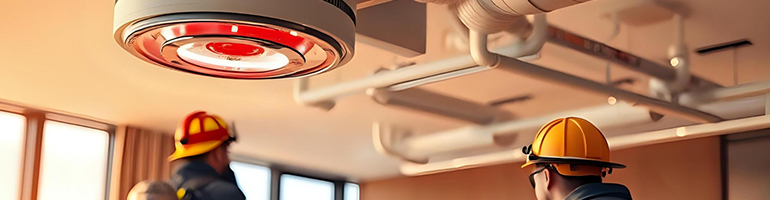
Fire and smoke simulation services evaluate building safety and evacuation performance under emergency scenarios using advanced simulation tools. This service focuses on modelling human evacuation behavior using Simulex within IESVE and analysing smoke movement and fire dynamics using PyroSim. The study helps assess evacuation time, smoke spread patterns, visibility conditions, and occupant safety during fire incidents. The outputs support fire safety design, regulatory compliance, and risk mitigation strategies for residential, commercial, and public buildings.
Specific Services

Human Evacuation Simulation using Simulex
Simulation of occupant movement and evacuation behavior during emergency scenarios to evaluate evacuation time, exit capacity, congestion points, and safe egress routes.
Get a Quote
Smoke Movement and Fire Dynamics Simulation using PyroSim
Modelling of smoke propagation, temperature rise, and visibility conditions during fire events to assess smoke control effectiveness and occupant safety.
Get a Quote
Means of Egress and Exit Capacity Assessment
Evaluation of exit routes, staircases, corridors, and door widths to ensure adequate evacuation capacity and compliance with fire safety guidelines.
Get a Quote
Fire Scenario and Risk Assessment
Development and analysis of multiple fire scenarios to evaluate building response under different fire locations, occupancy levels, and emergency conditions.
Get a QuoteWhich tools are used for evacuation and smoke simulation?
Human evacuation is typically simulated using Simulex within IESVE, while smoke movement and fire dynamics are analysed using PyroSim, which is based on advanced fire dynamics modelling.
How does fire and smoke simulation support compliance with NBC Part 4 – Fire and Life Safety requirements?
Fire and smoke simulations help evaluate evacuation time, exit capacity, smoke movement, and occupant safety under emergency scenarios, ensuring that building design meets the performance-based requirements specified in NBC Part 4 for safe evacuation and fire protection.
What outputs are generated from fire and smoke simulations?
Typical outputs include evacuation time calculations, occupant movement patterns, smoke spread maps, temperature distribution profiles, visibility conditions, and identification of safe evacuation routes.
Get a Quote
-

Aniket Chaudhari
-

Ankita Galande